

Photographing Joy
On George Lange, the pursuit of a single emotion, and what it means to photograph what you can't touch

Last week I was at a work retreat, in a world completely unrelated to photography, discussing private capital, managerial assistance, and industry trends for America’s working class. And yet, as part of our retreat, photographer George Lange spoke to several of us about his career and his lifelong pursuit of capturing joy.
There’s something almost absurd about a room full of finance professionals learning to photograph joy. No spreadsheets. No risk models. Just George Lange, one of the most celebrated portrait photographers of the last five decades, standing in a ballroom, telling a group of people who spend their days measuring things to start chasing something unmeasurable.
But as someone who lives between these worlds, the absurdity didn’t land on me the way it might have. Storytelling and human connection sit at the baseline of everything I do; in my career, in my writing, and behind the camera. The relationships I build, the mission I try to understand, the very real human experiences I try to connect to: all of it funnels toward the same impulse. Finding our shared humanity, wherever it lives.
Our emotional experiences and gestures are universal. I've felt this in my writing — in essays about love, dance, celebration, and unity. And I feel it in George Lange's work. For more than fifty years, he has been searching for the same ingredient in every image he takes. Not what looks good. Not what's flattering. Joy, as a form of genuine human connection. He's said: "Each day I am trying to find the place we are all connected, but I never know where that place will be." That's not a photography philosophy. That's a life philosophy.
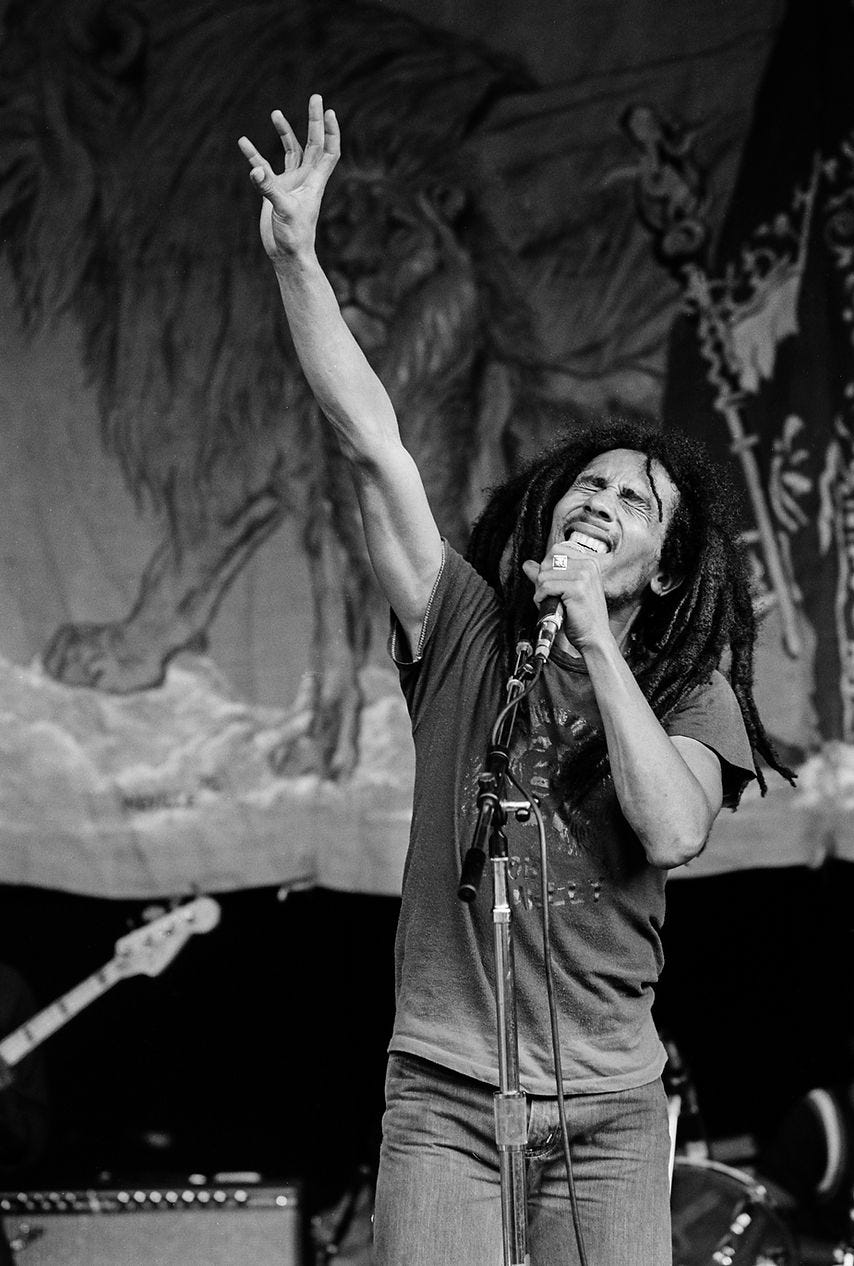
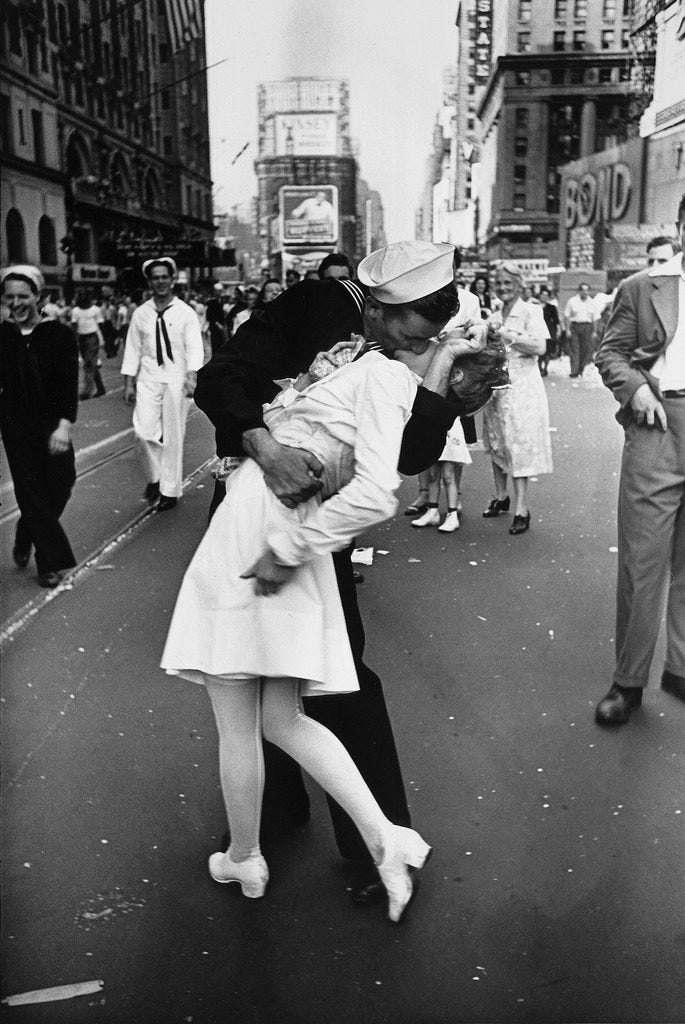
Other photographers have shaped how I see. Vivian Maier spent decades capturing the humor and rawness of everyday strangers in Chicago and New York, work that wasn't discovered until after her death, and which I wrote about here. Ellen von Unwerth celebrates unapologetic femininity, her images defined by high-energy, playful sensuality and cinematic storytelling, which trigger the past-dancer and feminine side of my creative flare. And Alfred Eisenstaedt, famously known for his photograph of a sailor kissing a nurse in Times Square, preferred a small handheld Leica, which let him disappear into a scene. The emotion arrived because the camera disappeared in the way he photographed. His approach to street photography has inspired much of my day to day practice.
Each of these artists is instantly recognizable. Beyond years of practice, they’ve each honed in on what moves them; the feeling that drives them to raise the camera in the first place. They see the world through frames and feelings that are distinctly their own.
As I look inward at my own photography, I know there’s much more figuring out ahead of me. But I do know that I’m drawn to beauty, and that my instinct is always toward shared humanity. What is my emotion? I haven’t named it the way Lange names joy. When I raise my camera, I notice connection, recognition, self-expression. I capture it candid. I capture it engaged with my subjects. I capture it directed. Perhaps I struggle to name a single emotion because the human condition is complex, and capturing that complexity, all the layers and waves that make us who we are, is what drives me.
I'm early in my photography journey. Perhaps a recognizable style will find me with time. Until then, I want to capture everything that makes us human, anywhere and everywhere.
’Til next week 📸